


A 25-man class with one home-state number
Michigan's 2026 football class has 25 commits from 17 states, and its home state loyalty rate is 3.4%. The class holds two five-stars and 13 four-stars, with a 76.4 average PrepRanks score and a 3.66-star average.
Reach has not bought much. The Wolverines found talent in Hawaii, Montana and Texas, yet the class sits fourth in the Big Ten by our read, behind Ohio State, Penn State and Oregon, and its 264 class score puts it somewhere between 15th and 20th nationally. The map is wide, the result is mid-tier for a Power Four program, and the position chart shows where the gaps are.
The table below gives the class totals, and the sections after it take the stars, the geography, the position mix and the quarterbacks in turn.
| Metric | Value |
|---|---|
| Total commits | 25 |
| Average PrepRanks score | 76.4/100 |
| Average stars | 3.66⭐ |
| Class score | 264 |
| Home state loyalty | 3.4% |
| States represented | 17 |
Two five-stars carry the top of the class
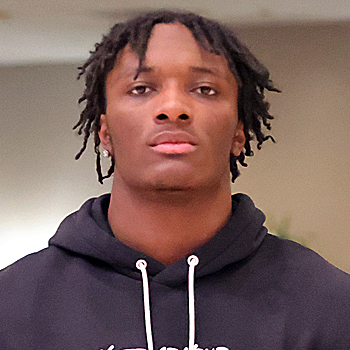
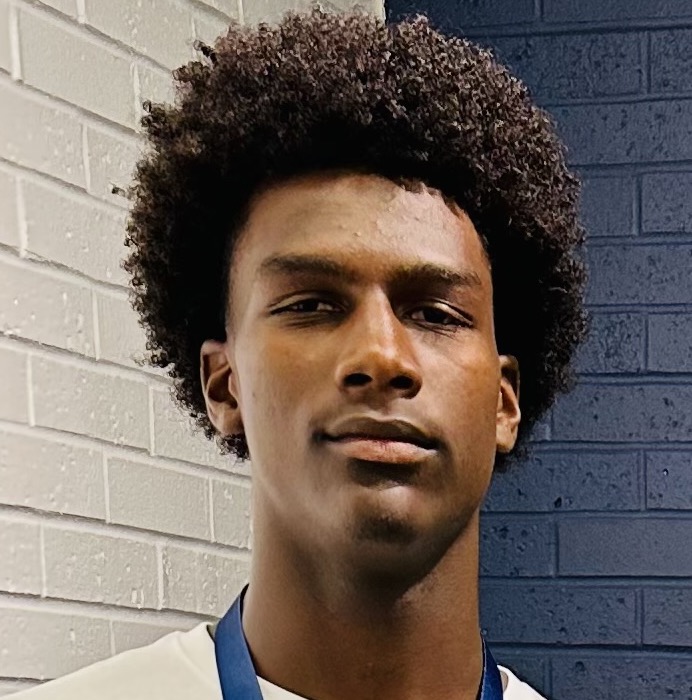
Savion Hiter and Carter Meadows are the only five-stars in the class, and they are the class's top two by PrepRanks score. Hiter, a running back from Louisa County in Virginia, scores 91.82. Meadows, an edge rusher from Gonzaga in Washington, DC, scores 88.18. The next best commit, offensive tackle Malakai Lee, is at 84.57.
Hiter's profile is built on his offers and his timing. His Recruiting Reality component is 38/40, with Alabama and Georgia among the offers. His Momentum component is 23/25, which reflects a late rise. His Elite Recognition component is 10/10, based on All-American honors. The Football Intelligence metrics flag speed and receiving ability, and the Speed Position Proxy reads strong for the running back and receiver groups as a whole.
Meadows grades differently. His Offer Quality component is 19/20 with Ohio State and Clemson on the list. His Momentum is 22/25, a steadier climb than Hiter's, and his Stability is 7/10, the lowest of the numbers we have for the two. That score signals some fluctuation in his commitment. His Position Scarcity score of 14/15 shows what edge rushers are worth in the formula, and it is higher than Hiter's 12/15 at running back.
Where the 25 commits come from
Texas supplied five commits and Virginia four. DC, Massachusetts and Illinois each gave two. Hawaii, Montana, South Carolina, Missouri and California gave one apiece among the states in the top-state table. After that comes the 3.4% from Michigan itself.
Our analysis reads some of this as competitive. The Texas commits came at the expense of TCU and Texas Tech, not Texas or Texas A&M. In Virginia, Michigan is up against Virginia Tech. In DC, it beat Maryland and Penn State for commits, which makes the district the nearest thing to a pipeline in the class: Meadows and Tariq Boney both come from there.
The outliers are the most unusual part. Malakai Lee, a developmental offensive tackle from Kamehameha Secondary in Honolulu, scores 84.57 with a Recruiting Reality score of 35/40 and a projected two-year timeline. Matt Ludwig, a tight end from Billings West in Montana, scores 84.05. Lee and Ludwig rank third and fourth in the class by score.
The cost of that reach shows up in the high school list. The ten top feeder schools each sent one player, and the class draws on 25 different high schools. There is no school that works as a Michigan pipeline. Gonzaga and De Smet in Missouri are private schools, and the pattern points to individual evaluation more than program relationships.
| State | Commits |
|---|---|
| Texas | 5 |
| Virginia | 4 |
| DC | 2 |
| Massachusetts | 2 |
| Illinois | 2 |
| Michigan | 3.4% of the class |
Four edge rushers, four interior linemen, no cornerbacks
The position table shows where Michigan spent. Edge rusher and interior offensive line have four commits each, and the class includes two defensive linemen, which adds up to a heavy front. Julian Walker of Dutch Fork in South Carolina (82.20) is the second edge commit by score. Titan Davis of De Smet (81.56) is the top defensive lineman. Bear McWhorter of Cass in Georgia (76.23) is the highest-scoring interior lineman we have listed.
The Football Intelligence metrics point the same way. The Size Premium Index reads strong for the interior line and defensive line commits, and the class has multiple linemen over 300 pounds. The Offensive Line Shortage Multiplier gives the class 75/100, because the interior depth is good and tackle depth is not. Lee is the only offensive tackle in it.
The defense shows the same pattern. Linebacker has one commit, Markel Dabney of Huguenot in Virginia, at 75.56. No cornerback appears in the class. Safety has two, including Jordan Deck from Lone Star in Texas. If the plan is to use safeties on the perimeter, the position mix is a bet on flexibility, with no cornerback on the roster to cover for it if the bet fails.
The formula also counts position scarcity, which carries 15% of the total. A class missing tackles and corners earns less there than one with a balanced mix.
| Position group | Commits |
|---|---|
| EDGE | 4 |
| IOL | 4 |
| WR | 3 |
| Safety | 2 |
| QB | 2 |
| OT | 1 |
| LB | 1 |
| CB | 0 |
Two four-star quarterbacks, one from the 2027 class
Brady Smigiel of Newbury Park in California scores 80.19, and Peter Bourque of Tabor Academy in Massachusetts scores 78.49. Bourque belongs to the 2027 class, so the two will not compete for the same spot in the same year. Michigan has three 2027 commits in all.
The Quarterback Premium Index rates the pair as moderate. Both address the scarcity of quarterbacks, but neither shows elite traits by that measure. That puts them in the same tier as the class overall: four-star prospects with a development path, without the profile of a top-five quarterback.
Receivers, tight ends and a thin backfield
Travis Johnson of Oscar Smith in Virginia leads the three receivers at 80.28. Two tight ends fill the other skill spot: Ludwig at 84.05 and Mason Bonner of Colorado at 76.70. Two tight ends gives Michigan the option of two-tight-end sets, though nothing in the data says the staff plans to use them.
Running back is lighter. Hiter is the star, and one other running back is in the class. His receiving ability could widen his role beyond that of a typical back, but the depth question would stay open.
Fourth in the Big Ten by score
Our read puts the class fourth in the Big Ten, behind Ohio State, Penn State and Oregon. The class lacks the five-star volume of Ohio State, and it outperforms most conference programs in four-star acquisition. Thirteen four-stars is the strength of the class, and two five-stars is the ceiling.
The class score of 264 puts Michigan between 15th and 20th nationally. The 76.4 average PrepRanks score and the 3.66-star average put the class in the upper-middle tier of the conference. Michigan beats Wisconsin, Iowa and Michigan State for similar prospect profiles, but loses elite prospects when the competition is stronger. Defensive back and offensive tackle look like the markets where those losses show most, which lines up with the position table.
The counterpoint: this class may be more stable than it looks
A case for the class starts with commitment quality. The stability scores for the top commits run from 7-9/10, which reads as solid commitments. Eight of the 25 are three-stars and two are two-stars, so Michigan is also betting that its staff can develop players who outperform their ratings. That is a defensible approach, and a class with 15 blue-chip prospects out of 25 is not thin.
The 3.4% number may also overstate the problem. The class did not need to be local to be good, and Hawaii and Montana produced two of its four highest scores. The evidence of a recruiting problem is the home state rate plus the position gaps, not the geography itself. A class with more in-state talent might have been better, and our data does not show that it was available.
What the 2027 commits suggest
The three 2027 commits can be read two ways. Securing future classes while filling current needs would show strength. Reaching forward because the current cycle is competitive would show the opposite. The data does not settle which reading is correct.
What the data does show is a class built from everywhere and anchored by two players from Virginia and DC, with one home-state commit rate of 3.4%. Michigan assembled 25 players from 17 states, and the holes in the class are at cornerback, tackle and linebacker.